
How to find your first designer 🔍
What we learned from over 300 portfolios in a discipline we don't practice


While building a startup, an invariable need is to constantly learn new things, then do them acceptably well on the first try. Among those things, hiring is a critical one to get right, and the learning curve is especially steep when hiring for or evaluating a discipline you’ve never encountered before.
Over the last couple of years we’ve engaged in several in-depth searches for designers, a role that was quite novel to us because our founding team, coming from our technical/scientific background, has little design expertise. After in-depth research and talking to many designers to understand what that world looks like, we wrote some notes to help anyone else who is looking to build out their design team for the first time. As a designer, you might also be interested in what it looks like from the other side.
The design and designer landscape
In this process, we came to realize that design can encompass many different things: UX research, UX design, UI design, graphics, animation, branding, and other hybrid activities that are design + something else, e.g. many marketing activities. It’s important to get a sense of what skill set you most critically need at the moment when you say “I need a designer”.
The primary skills software startups seek out at an early stage are UX design (including research) and UI design. Roughly speaking, UX research/design = talking to users, understanding their needs, and figuring out what the product should do in order to meet that need — overlapping a lot with product work. UI design = making it look pretty, shepherding aesthetics, creating and scaling visual design systems. Our understanding from several sources is that it is rare to find both strong UX and UI skills in the same person, because they are quite different practices. Asking for “UX/UI designer” (often titled as “product designer”) is somewhat like asking for a “full-stack engineer”: a really good engineer that is truly in the top 1% up and down the stack is a unicorn.
When considering designers to add to your team, you’ll run into the following options:
A high-energy, smart, young, full-time employee (“hire for potential, not experience”) — less experienced but more affordable
An experienced IC, possibly part-time / freelance
An experienced leader, possibly part-time
A design agency, usually on a project/phased basis. If you’ve raised VC and want to get a lot of good quality design work of various types done in a short amount of time, your best bet is to throw money at an agency.1 But this has its downsides; see below.
No designer at all but relying on AI, which is increasingly becoming a viable option at the early stage.
While for technical hires betting on a high-talent, early-career employee can pay off, and contract agencies (dev shops) can be more hit or miss, for designers the calculus changes. That’s because:
It is hard to identify what makes a designer “good” early in their career when you aren’t a designer yourself.
Early-career designers tend to be stronger in UI (aesthetics) than UX (product/functionality), the latter of which comes with experience.2 Specifically, it’s easier to gauge aesthetic or visual taste from their portfolio, but trickier to evaluate product/user sense or ability to work in a team.
It’ll take significant effort to find strong UX and UI skills in the same hire, because they are rare.
A common theme we heard is that designers prefer not to work alone, but rather in a team with other designers. It’s a role that often benefits from the ability to bounce ideas off others for creative feedback, rather than being independently siloed.
Designers also prefer to work on a variety of projects, which is more stimulating for creativity. For both this and the reason above, it’s more common to find designers in agencies or freelancing vs engineers.
As a result, you may find that more experienced designers to be worth the increased cost.
Evaluating designers
When you’re evaluating designers the first thing you will look at is their portfolio, a website showing off all the projects they’ve worked on. It’s like looking at someone’s projects on GitHub, but much more visual. Sometimes you might see an amazing, beautiful portfolio, but keep in mind that each project was probably done with several other designers. Even if the work looks fantastic, you’ll need to understand what their contribution was to each project; a portfolio may be showcasing work largely done by others.
Beyond portfolio work, it’s critical to understand a designer’s ability to think, their product sense, and their collaboration skills — and the best way to do this is to dig deep into their work and ask lots of questions (as with any role). Many of the designers we met were well-rehearsed for one-way presentations of their prettiest work in their portfolios; our process aimed to get past this as quickly as possible in order to understand the thought process, tradeoffs, and the why through an interactive conversation.3
The last two tendencies above — preferring teams and preferring variety — are why design agencies can be better bets than individuals: you’ll get a group of designers who have worked together before, have practiced their craft across other projects, and are supervised by someone with experience. If you find a referral to a good agency (see footnotes below), you can hire them much faster than running your own process, with more consistent work quality. The downside of an agency is that because it’s often project-based, it’s hard to get someone who thinks long-term about the design needs of your team, and it can be expensive.
Yet, the desire to work on a variety of projects applies to solo designers too, who often prefer to freelance on multiple projects rather than commit full-time to one. Because of this, both agencies and solo designers are generally more willing to do a “try before you buy” trial period before committing to a longer-term relationship, compared to software engineers. This is very helpful to explore if someone’s technical skill set and collaboration skills are a fit for your team; working together for at least 4–6 weeks should give you a reasonable idea.
Also worth considering: the career goals of your designer hire. We found that this fell into two buckets: the artists (“how satisfied am I creatively?”) and the generalists (“excited to be a part of this startup thing”). The artists are more focused on their craft, aesthetics, and growing their design skills; while the generalists are willing to pick up things outside of design and may be better suited for a startup environment (e.g. one candidate we met had done a significant amount of prompt engineering and integrated user research into AI pipelines). The generalists are more willing to work solo, but might be weaker in aesthetics which can stick out in your product. The artists will want to work in a team, and also care about their career growth in a “creative” direction, which can diverge from a startup’s “good enough” needs.
Finally, talented designers can be found all over the world and you can get great bang for the buck by hiring remotely, maybe 3–5x as cost-efficient as SF-based designers (the most expensive market). As one well-regarded agency we talked to said, “we basically try to hire anywhere but the US”.
For Parsnip, we found that the best fits were M-shaped generalist designers with an analytical mindset and a breadth of background knowledge, because we wanted folks embedded in our team who could learn new things quickly, think about a highly technical product long term, and take ownership of design holistically. However, of the 300 portfolios we’d seen, fewer than 10 had this profile. We might have had a higher hit rate with a better designer network, but if you’re just starting out with your first hire like we were, it’s definitely going to be a numbers game with your “GTM for designer outreach”!
Some final tips
In case you are thinking of running your own designer hiring process, consider:
When we were actively searching, read.cv was the place where “designers look for jobs that care about design” and one of the best top-of-funnel sources of strong designers. We also looked at JDs there for inspiration. It’s since been acquired and shut down; you might want to look around and ask AI what the current replacement is.
Reach out to any designers in your network — designers often follow each other’s work and are usually well connected in communities that pass job opportunities around for both freelance and full-time work.
Likewise, it can also be helpful to borrow an experienced designer friend, if you have one, to evaluate your strongest candidates.
As with any role, creating a straightforward “LinkedIn Easy Apply” process invites a lot of spam, some of it from people who aren’t real, especially in the age of AI. We actually deliberately made it harder to apply by listing only an email and asking candidates to write to us with, essentially, an open-ended cover letter.4 This allowed us to assess their writing (critical in a remote role) and ability to cut through the fluff, as well as filter out low-effort applications by both raising activation energy and making generic or AI-slop responses obvious.
We highly believe in the value of reference checks and have never regretted taking the time to do them (and have often regretted not doing so).
P.S. AI is changing everything
We wrote the first draft of this article before AI really started changing the nature of all jobs on our team. In general, we’re seeing that using AI tools skillfully allows anyone to go outside of their traditional skill set and empowers fast-learning generalists to be especially potent on a team.
However, this doesn’t obviate the need for designers, because every part of a product still requires judgment that AI can’t provide. It’s just that the process is different — where software engineers are shifting from writing code to managing agentic pipelines, designers are shifting from pushing pixels to more strategic thinking and collaborating with frontend engineers to build workflows that can efficiently translate design to code. While senior designers have experience that helps them figure out which tools are effective, junior designers are less set in their ways and more willing to try new AI tools overall.
We’re constantly thinking about how to reorganize our team processes to take advantage of new tools, and will explore the result in a future post 😊.
One change we’re pretty sure will stick: design will move away from canvas-based tools (primarily Figma) to code-based representations such as Claude Design, which gives up a small amount of control in return for less manual labor and significantly faster iteration. See this post as one example.
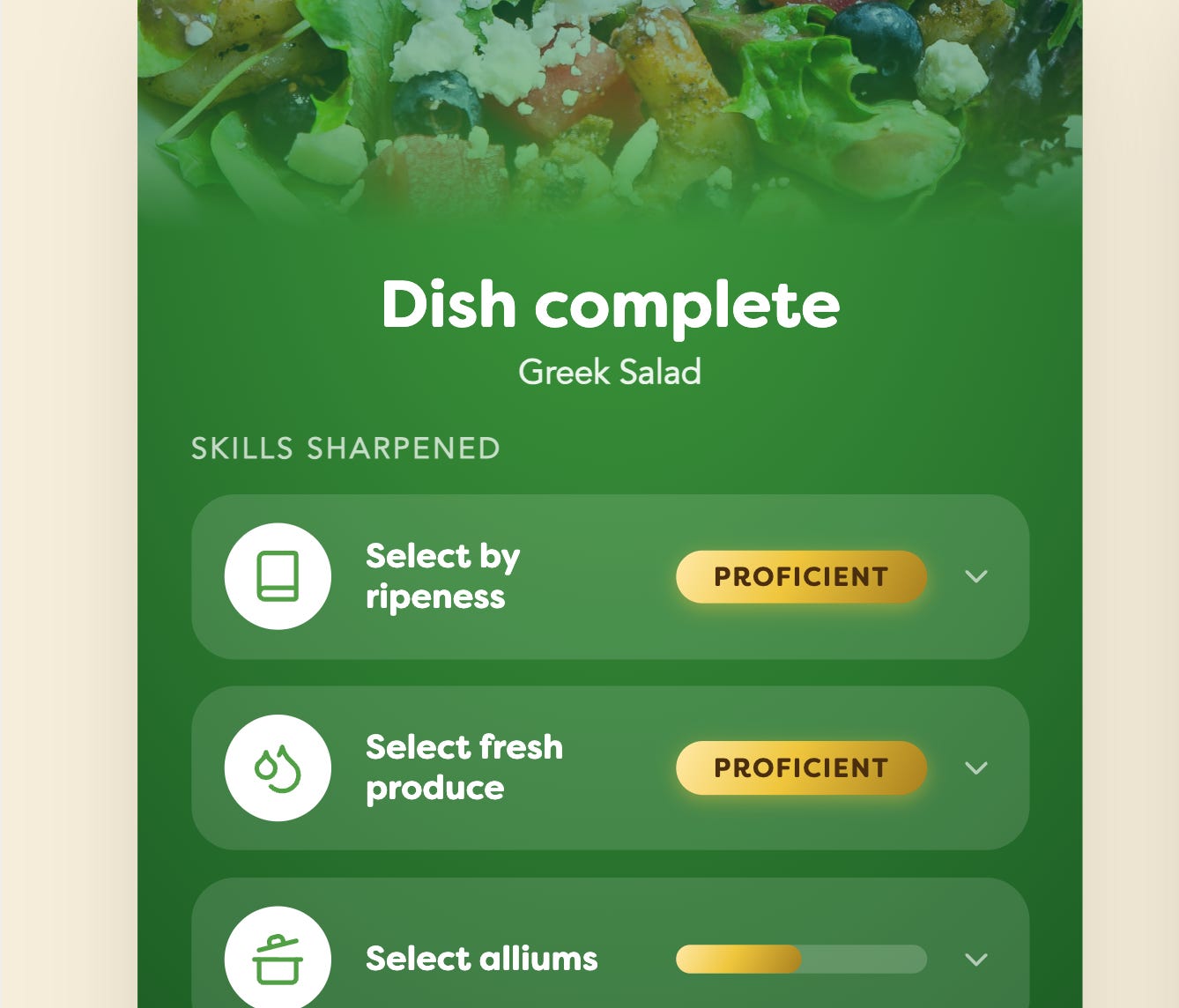
A sneak peek from our designs for the next version of Parsnip…
We did meet designers with a more technical background (usually from an HCI or CS background) who are an exception to this rule of thumb.
Start with these questions, for example, then ask lots of follow-ups based on the answers you get:
What were the alternatives you explored before settling on this design? How did you converge on this as the final result?
Can you screen-share your Figma file and walk me through your process? (Then, ask lots of questions about what you see.)
What were the trickiest problems you tackled in this design process? What were the most surprising things you learned?
Here’s the job description we used last year:
